
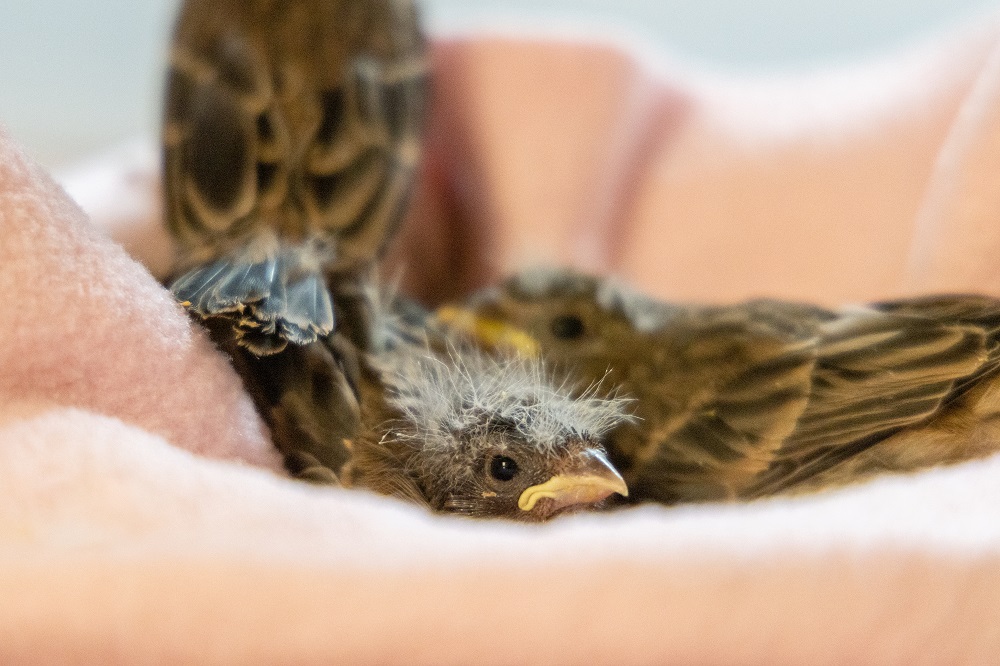
Baby birds are kept in a nursery at the Wildlife Care Center in Burlingame, where they may need to be fed as often as every half-hour. Photo by Devin Roberts.
By Kate Bradshaw
August 4, 2022
Orphaned baby songbirds and poisoned seagulls. Small squirrels snapped up by cats. Skunks caught in bear traps. Wild animals in trouble like these throughout the Peninsula may – if they’re lucky – eventually find their way to one of a handful of wildlife rescue centers around the region.
Facilities like the Peninsula Humane Society & SPCA’s Wildlife Care Center in Burlingame and the Wildlife Center of Silicon Valley in San José are home to a dedicated team of staffers and volunteers who take on the daunting task of nursing these sick, injured and orphaned animals back to health and releasing them back into the wild.
These centers cumulatively serve thousands of wild animals across dozens of species every year and work to mimic the natural environments these animals are accustomed to. But every year, the organizations also encounter animals that are “over-rescued” by well-meaning residents who mistakenly think they’ve been abandoned.
The Six Fifty recently went behind the scenes of these wildlife centers to learn more about wild animal caretaking and what these organizations wish people knew about how to coexist with their non-human neighbors.
Full story here.
 Kate Bradshaw
Leave a comment