
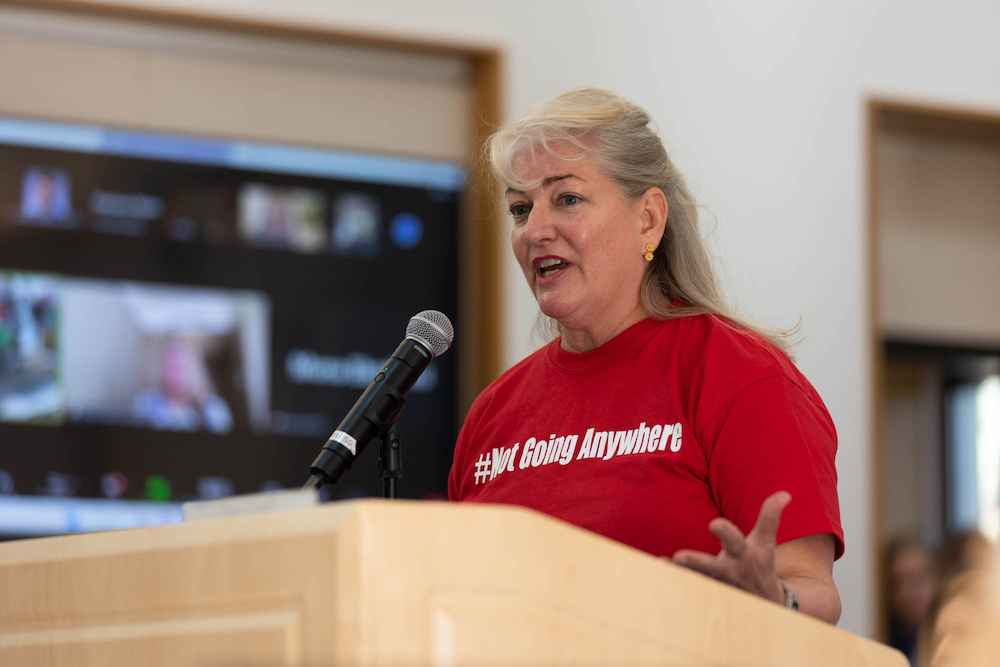
Pam Silvaroli comments on plans for multifamily zoning along El Camino Real at an Atherton City Council meeting Jan. 31. (Photo by Magali Gauthier)
Wealthy towns have a rich playbook for preserving the status quo around housing. But it’s starting to backfire.
By Kate Bradshaw
Published Feb. 15, 2023 in The Six Fifty.
Residents in cities and towns across the Peninsula have been, depending on who you ask, either embarrassing themselves with exclusionary tactics against the threat of new neighbors, or fighting the good fight against state overreach.
One big reason why discussions about the region’s housing shortage have been so fierce of late is because the state has assigned each community across California a certain number of homes to plan for between now and 2031, and each Bay Area community was required to have those plans approved by the end of January – but so far, Redwood City is the only one on the Peninsula to have met that deadline. While the state’s mandates and enforcement related to these eight-year cycles of home-planning assignments (called “RHNA,” short for “Regional Housing Needs Allocation”) have been more lax in previous rounds, the state is warning cities to be compliant amid increasing pressure to address the widespread housing shortage.
Based on those assignments, cities have had to review their codes to see where they should change zoning to accommodate the new homes and submit those proposals to the state for approval. Those new zoning changes don’t necessarily mean that the new homes each city is planning for will get built, just that it is possible for developers to build them. That process has been playing out for much of the past year, and Peninsula communities – home to some of the most wealthy zip codes in the U.S. – have been some of the most creative when it comes to looking for loopholes to avoid making changes. Otherwise quiet enclaves have been going on the defensive and drawing record crowds to public meetings.
But now that the January deadline for having plans approved by the state has passed, noncompliant cities are now subject to what’s called the “Builder’s Remedy” – a penalty that essentially permits developers to build affordable housing that doesn’t meet a city’s zoning codes and general plan so long as it meets some very basic requirements. For instance, it must provide housing to low, very-low or moderate-income households, comply with the California Environmental Quality Act, and be in an area with enough water and sewage facilities to accommodate it, among other conditions.
Mountain View and Los Altos Hills are already talking about receiving development applications under these new rules, San Francisco Business Times reports, and more are likely on the way.
Here are five of the most unique approaches that residents and politicians in Peninsula communities have taken to push back against adding new homes within city limits.
Full story here.
 Kate Bradshaw
Leave a comment