
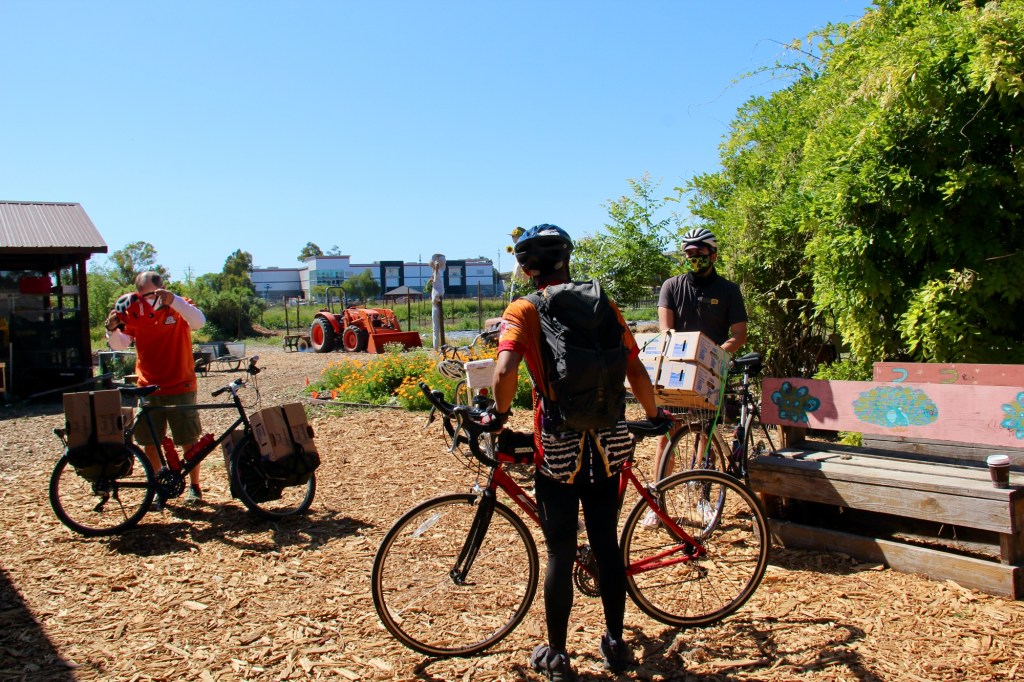
Farm boxes get loaded onto volunteers’ bicycles at Veggielution urban farm in San Jose. During the pandemic, the program delivered food to 40 families by partnering with Silicon Valley Bicycle Coalition and has grown to serve 250. May 1, 2021. Courtesy Silicon Valley Bicycle Coalition.
By Kate Bradshaw
June 27, 2021
As communities emerge from the pandemic, local thought leaders like Bacon are asking whether this is a turning point that could trigger a revolution that changes local food systems for the better, or whether the hazards that farms face – not just in recovering from the pandemic but from the looming impacts of climate change – pose an existential threat.
Across the South Bay, there are innovations sprouting up aimed at tackling differnet problems in the food system, specifically around the nexus of farm foods, food waste and food aid.
On the more conceptual side of the spectrum, there are growing initiatives to both declare food as a human right statewide or treat food as medicine.
Earlier this year, state Sen. Melissa Hurtado of District 14 – an area of California that includes parts of Fresno, Kern, Kings and Tulare counties – proposed Senate Bill 108, which asserts: “Every human being has a right to access sufficient, healthy and affordable food.”
One-third of global food production is at risk due to climate change, according to Hurtado. Given rising costs of energy, a growing population in California and shifting land usage, “We must make sure the people in our state are fed now and in the future,” she explained in remarks about the bill.
In a local initiative, Stanford University is home to the Food for Health Equity Lab, which is focused on generating evidence about how healthy foods impact chronic disease that can inform community health centers, according to the program’s website.
Read more at almanacnews.com.
This article was produced as a project for the USC Annenberg Center for Health Journalism’s 2020 Data Fellowship. It is the third and final article in a series exploring the impacts of the COVID-19 pandemic on local food systems and policies.
 Kate Bradshaw
Leave a comment