
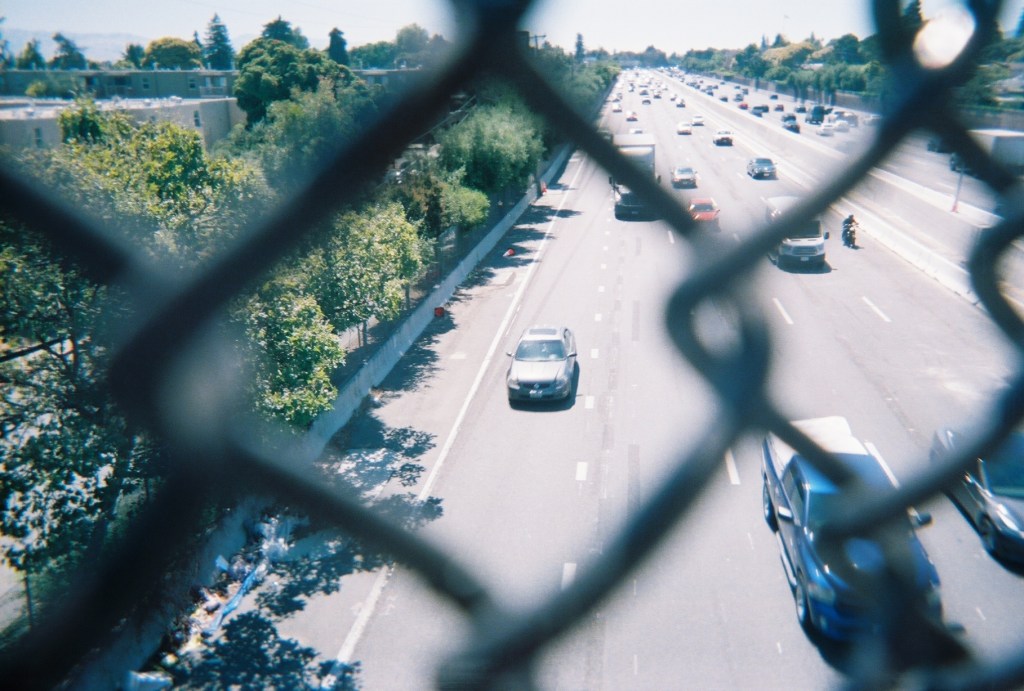
Traffic on U.S. 101, which cuts through the city of East Palo Alto, as shown from a new bike and pedestrian bridge over the highway. Photo by Selijah Meacham.
By Kate Bradshaw
September 17, 2019
East Palo Alto is a cut-through haven, observes Susan Barnes, who has spent the last year puzzling exclusively over how to solve the city’s traffic woes. For the former city of Palo Alto economic development and redevelopment manager, it’s a huge challenge, but one that excites her.
As an executive fellow with Fuse Corps, a nonprofit that positions professionals to tackle year-long projects in local governments, she’s been tasked with helping East Palo Alto, slammed by the rampant commercial growth of its neighbors – including the one she used to work for – make its roads work for its residents.
She’s leading a mobility study to try to figure out how to help residents get around a city where a staggering 84% of trips don’t start or end in city limits, and where residents themselves drive far less than people who live elsewhere in San Mateo County. According to county health data, East Palo Alto residents travel by car only three miles per day, substantially less than the city’s neighbors in more affluent areas: Menlo Park residents average nine miles per day; Portola Valley, 11 miles; Woodside, 13 miles; and Atherton, 19 miles.
“We have plenty of housing, but we don’t have jobs that are available to employable residents. People have to traverse out of East Palo Alto to go to their workplace,” Barnes said.
Read more at paloaltoonline.com.
 Kate Bradshaw
Leave a comment